
Your Violin Has An Open Seam
It starts as a buzz you can’t quite place.
You change the strings. You check the bridge. You try different rosin. The buzz is still there…Not always, just sometimes, on certain notes, just enough to keep you questioning yourself or has your stand partner give you the side eye when they hear it. You start to wonder if it’s your bow arm. It isn’t. Nine times out of ten, when a mysterious buzz on a violin refuses to go away, you’re dealing with an open seam.
The good news: it’s one of the most common repairs we see in the shop, and one of the most straightforward to fix. The important news: it’s also one where waiting makes things worse and it won’t fix itself over time.
A violin isn’t held together with screws or nails. The top plate and back plate are glued to the ribs using hide glue. This is by design, hide glue is strong enough to hold under normal playing conditions but is specifically chosen because it can release under stress since it can also be brittle, rather than transmitting that stress into the more fragile spruce of the top plate or the maple of the back and causing a crack in the plate.
In other words, the seam is the instrument’s built-in release valve and insurance policy. When humidity swings dramatically, when an instrument gets too dry over winter or too damp in summer, the seam opens rather than the plate cracks. The glue does its job. Now yours is to get it closed in a timely manner before that next performance.
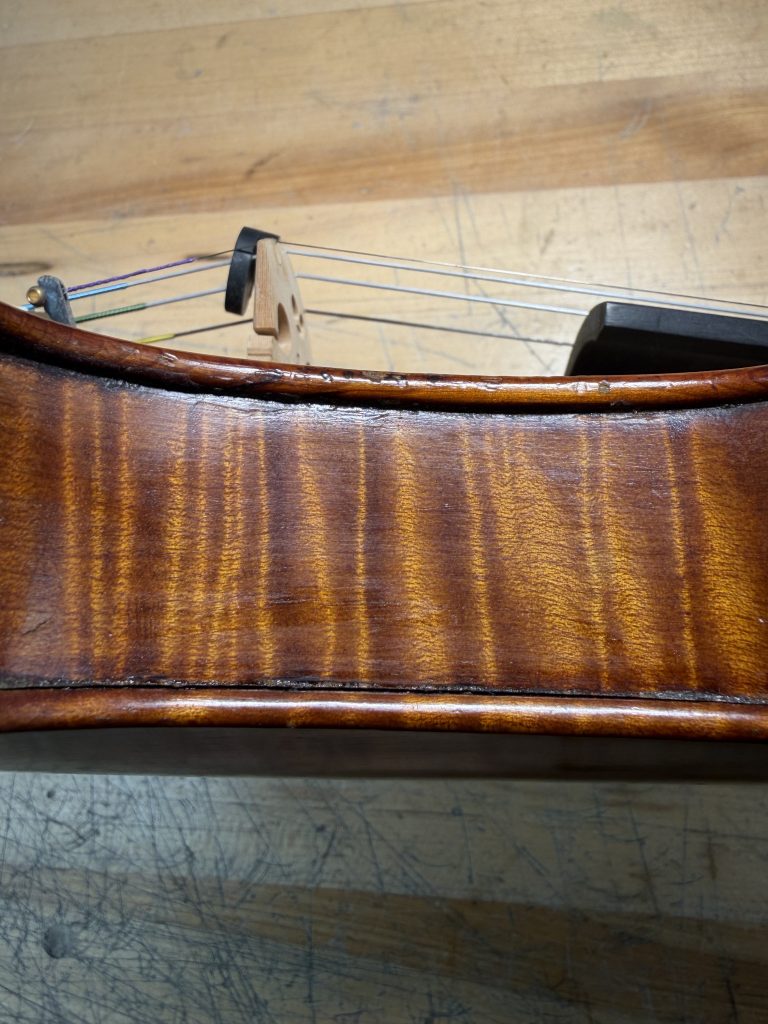
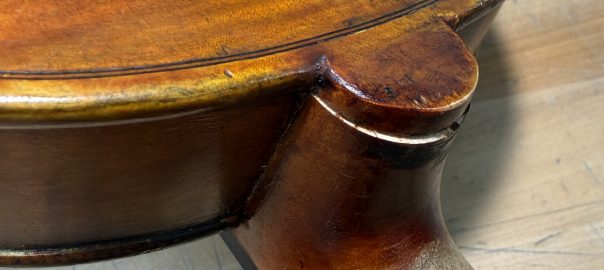
Open seams aren’t always visible, especially in the early stages. Here’s how we look for them in the workshop. First we will do a visual check to see if anything pops out at us. Next would be a more sensitive test is the paper method. Take a thin strip of paper and slide it lightly along the seam. If it catches or slips into the joint at any point, the seam is open there. You can also use sound. Tap gently around the outer edge of the top and back with a knuckle. A closed seam sounds solid, like tapping a countertop. An open seam produces a slightly hollow knocking of the wood. almost like the wood has come loose from itself, because it has.
When a seam opens, even a hairline gap, the two surfaces of wood at that joint can vibrate against each other when the instrument is played. That vibration registers as a buzz, usually sensitive to certain notes or strings, which is why it seems to come and go. Players often describe it as random, or worse than usual in certain rooms or weather conditions.
Humidity is usually the trigger. Dry winter air causes wood to contract. The glue joint, which was fitted in more stable conditions, suddenly has two surfaces that no longer sit perfectly against each other. The seam opens. Spring comes, moisture returns, and sometimes the instrument will seem to partially self-correct — but don’t count on that. A seam that has opened once is more likely to open again, and the longer it stays open, the more difficult it will be to close the seam.
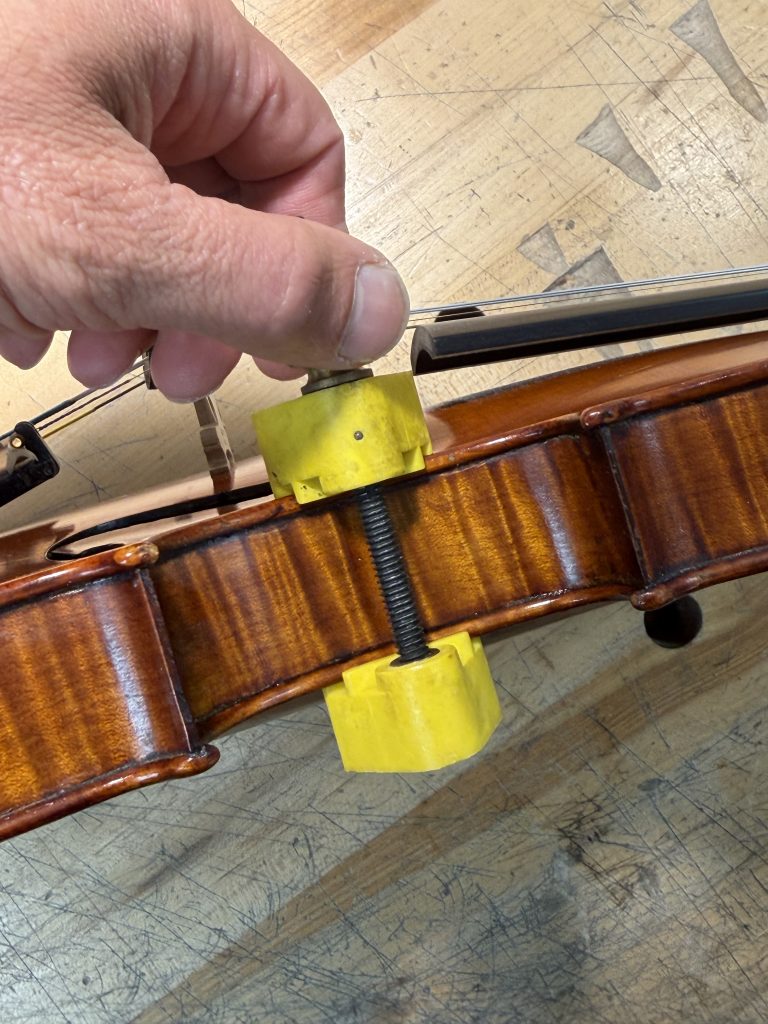
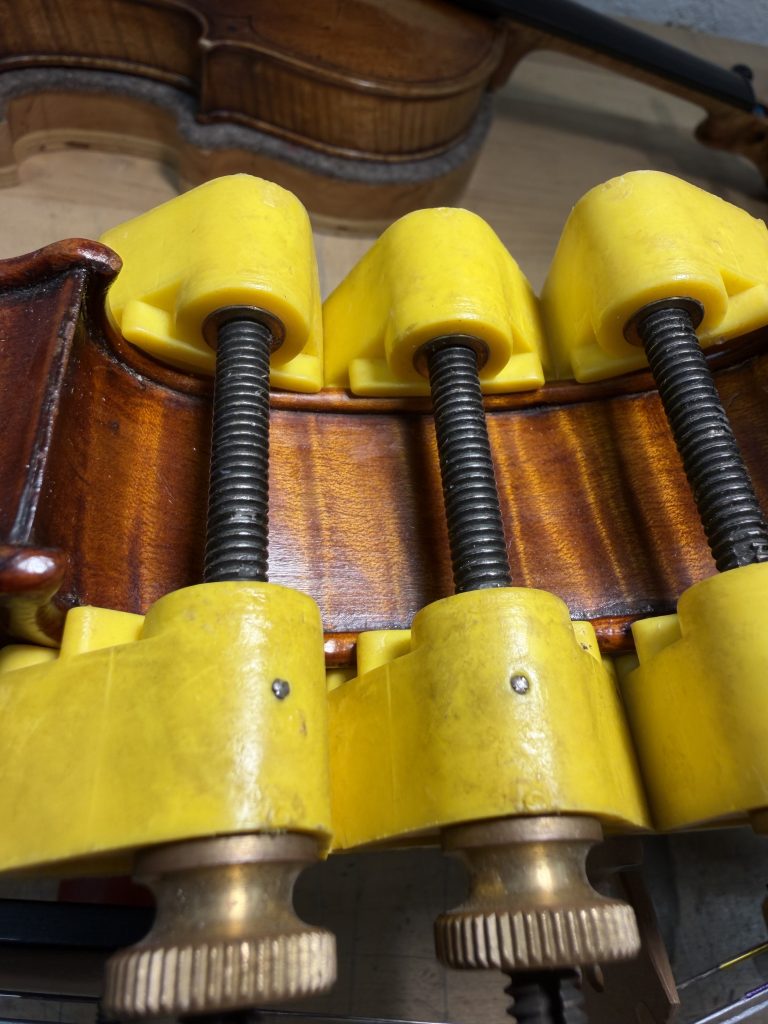
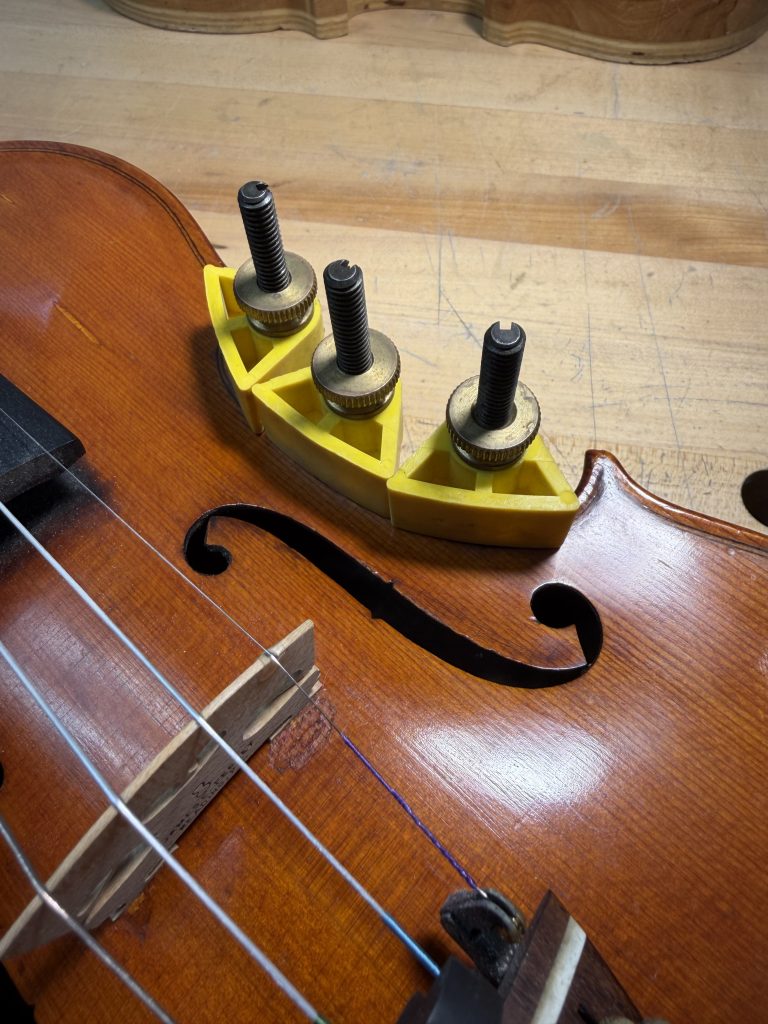
A fresh open seam, caught quickly is a simple, inexpensive repair that doesn’t take very long. The surfaces are clean and free of debris. The rib hasn’t moved and the joint goes back together fairly easy and cleanly.
An open seam is actively hurting your sound. Every vibration that crosses that joint is losing volume instead of transmitting it through the instruments f-holes. You’re playing a slightly muffled version of your violin, and you may not even realize how much you’re missing until the seam is closed.
We work on instruments at every level, from student rentals to professional instruments. A well-maintained instrument plays better and allows the violin to continue to last hundreds of years if properly cared for.