
Is Your Violin Bridge Holding You Back
Your violin might be holding you back in ways that have nothing to do with your playing.
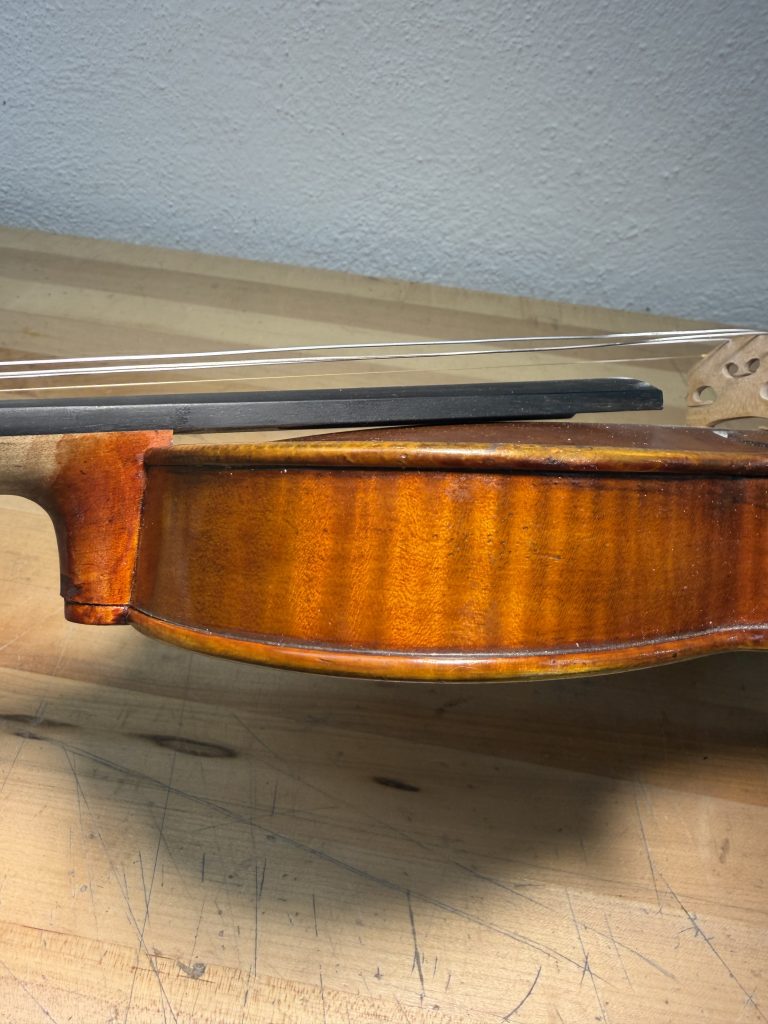
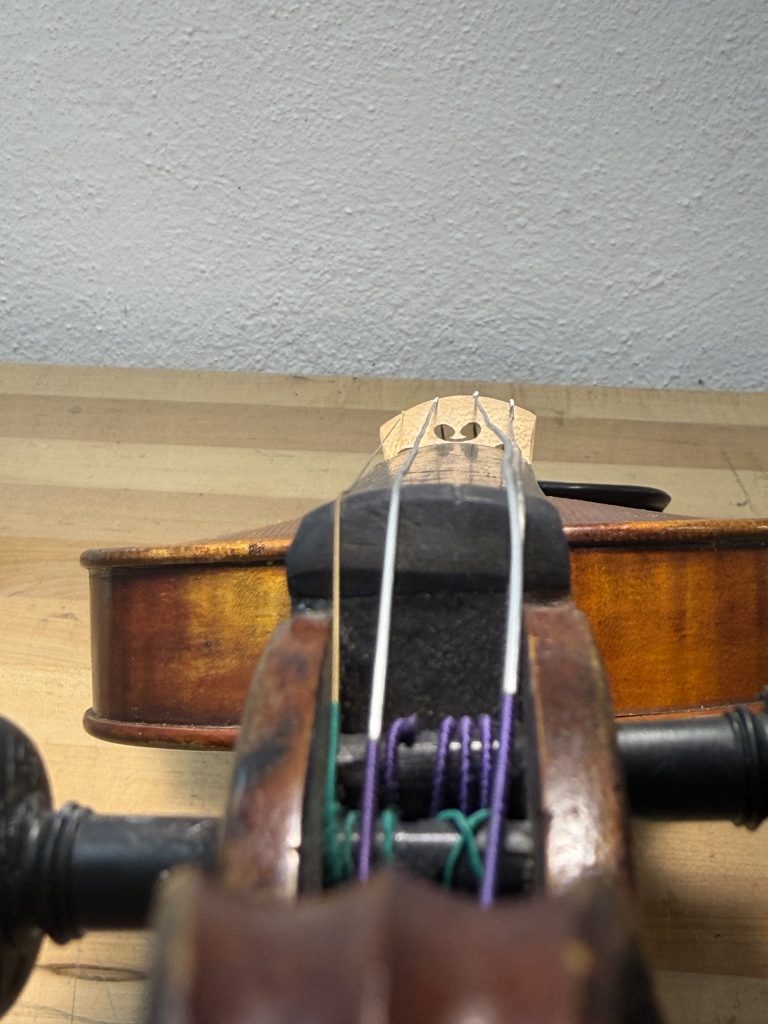
If you’ve noticed that your strings feel harder to press than they used to, that your tone has lost some of its openness, or that your bridge seems oddly low despite everything looking fine on the surface… Your instrument may be telling you it needs a neck reset. It’s one of the most misunderstood repairs in the shop, and one of the most impactful for both tone and playability.
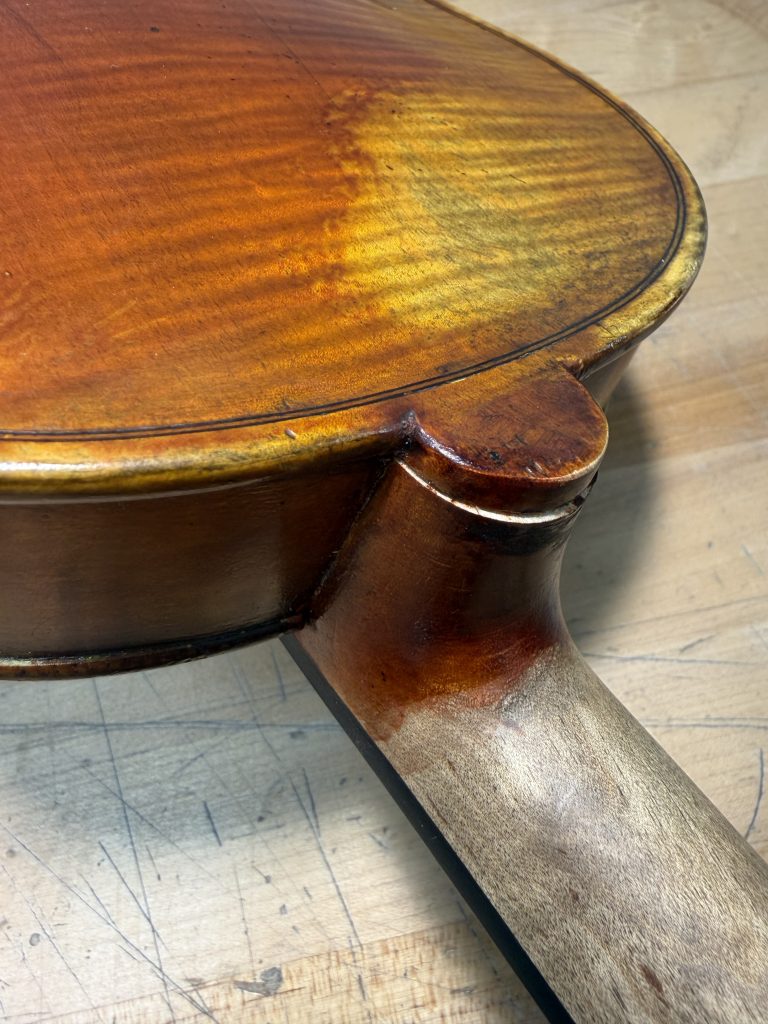
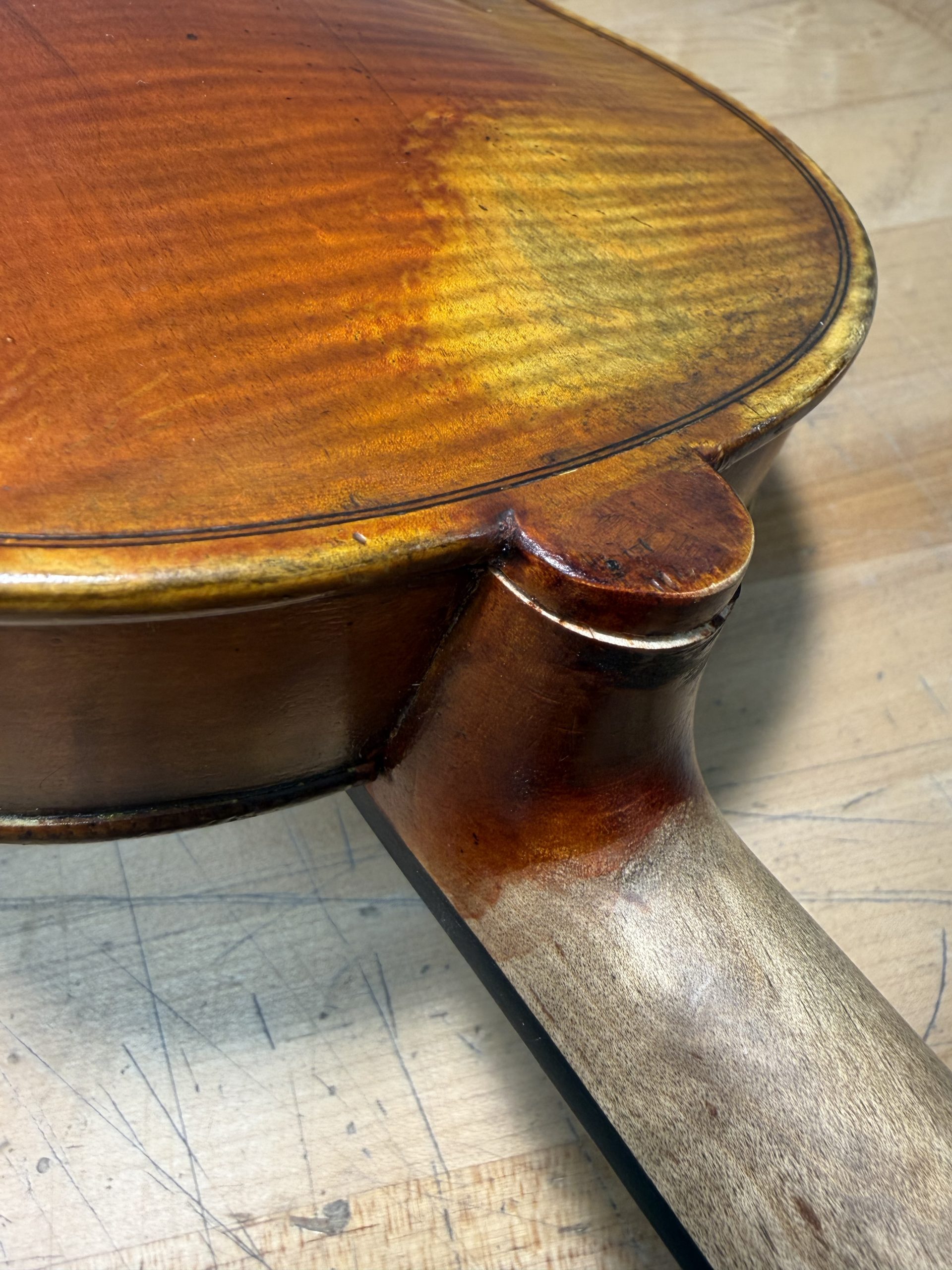
The neck of your violin is not bolted in place. It’s set into the body of the instrument using a precisely cut joint — a combination of a dovetail, butt joint, and a rabbet and fit to precision while being held with hide glue. That joint was designed to be opened and corrected, because the forces at work on a violin are considerable and constant. The violin is under extreme pressure with modern day string tension.
Under normal string tension, the neck is being pulled forward and downward by roughly 20 pounds of string pressure, day after day, year after year. Over time, especially on older instruments, instruments that have experienced humidity swings, or instruments that weren’t set up correctly to begin with, the neck angle can easily shift. When that angle drops, it changes everything: string height, bridge height, playability, projection and tone.
A neck reset corrects that angle. Done right, it restores the geometry the instrument was designed around and often unlocks tone the player hasn’t heard in years if ever.
This happens more frequently on instruments that have been exposed to humidity extremes, instruments that were originally glued with something other than proper hide glue or older student instruments where the joint wasn’t tight to begin with and not properly set.
What the Repair Actually Involves… There are two main approaches, and which one is right depends on how much the projection has dropped.
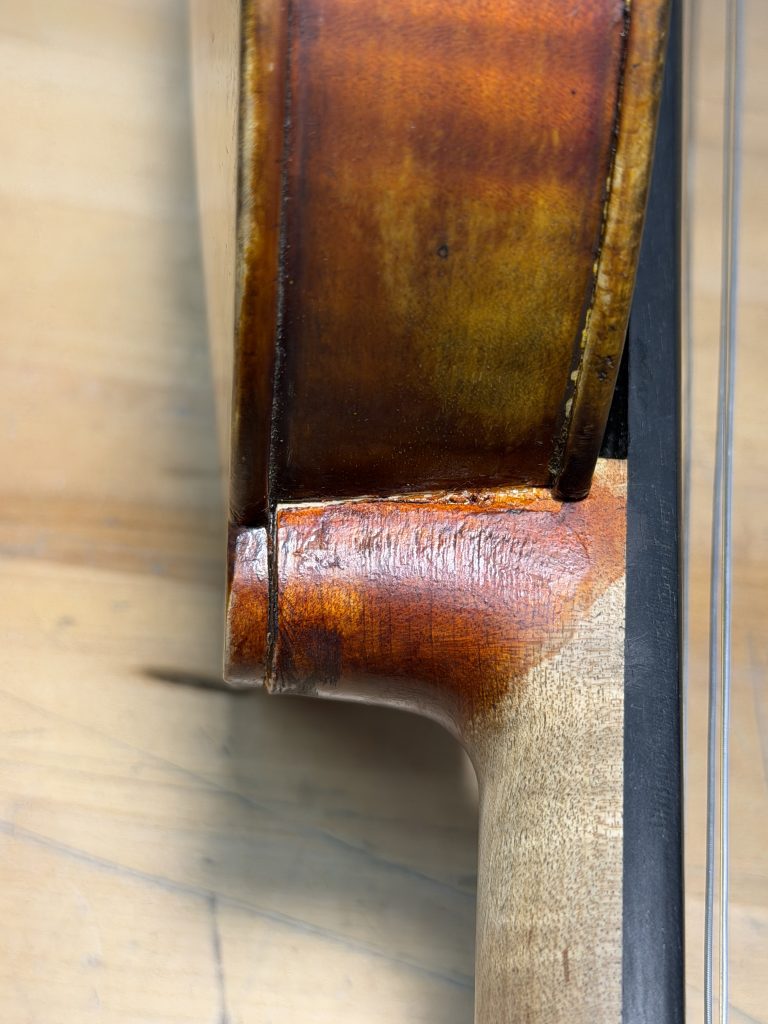
For modest projection losses such as a millimeter or two, many luthiers perform what’s sometimes called a projection raise or pull-up. The top is carefully opened along the upper bout seam, a precisely fitted shim is inserted between the neck root and the top plate, and the instrument is reglued and a new bridge is fitted. This is often called a New York style neck lift. It’s minimally invasive and, done correctly, invisible to most players.
For more significant angle problems, or when the neck joint itself has failed structurally, a full neck reset is required: the neck is removed, the joint surfaces are cleaned, the mortise is rebuilt, the angle is corrected, and the neck is reglued at the proper geometry. A new bridge almost always follows to match the new projection. This is skilled work that takes time to do right, which is exactly why it makes a meaningful difference when it’s done properly.
A neck reset restores the instrument to the tension it was designed for. Players consistently describe the result as the instrument opening up with more volume, better response and easier playability across all positions. The repair is especially valuable on quality instruments where the underlying wood has real tonal potential that a compromised setup has been suppressing. For low end student instruments, the answer depends on the instrument’s value and condition. We’ll always give you an honest assessment before recommending a repair that doesn’t make sense for the instrument or your budget.
If any of these signs sound familiar, bring your instrument in. A neck angle assessment takes only a few minutes in the workshop, and we’ll show you exactly what we’re seeing along with walking you through the entire restoration process.